

Virtual exhibitions are no longer about uploading static images to a website and calling it digital. The shift towards immersive, AI-powered environments has fundamentally changed how audiences experience art online. Museums and galleries now deploy VR, AR, and AI personalisation to create interactive spaces where visitors inspect artworks closely, navigate thematic narratives, and engage emotionally in ways that rival physical visits. For artists, curators, and museum professionals, understanding these trends is essential to staying relevant and delivering compelling virtual gallery experiences in 2026.
Table of Contents
- Key Takeaways
- Immersive technologies transforming exhibitions
- AI-driven curation methods enhancing exhibition design
- Balancing hybrid and pure digital exhibition models
- Practical steps for adopting digital exhibition trends
- Discover curate.tours' 3D virtual exhibitions platform
- Frequently asked questions on digital exhibition trends
Key Takeaways
| Point | Details |
|---|---|
| Immersive tech shift | The article describes a move from static digital exhibitions to AI powered VR AR and personalised environments that enhance interaction and emotional engagement. |
| AI guided curation | AI driven workflows streamline tagging clustering and narrative generation while humans validate results to safeguard accuracy and provenance. |
| Hybrid models boost engagement | Combining digital and physical elements yields higher visitor engagement than purely digital experiences. |
| Ethical oversight essential | Human in the loop and transparent AI labelling help maintain rigour and trust in AI assisted exhibitions. |
Immersive technologies transforming exhibitions
Traditional digital exhibitions relied on flat images and text descriptions, offering little more than a slideshow experience. Today, immersive technologies like 3D environments, VR headsets, and AR overlays transport visitors into fully interactive spaces. These technologies allow audiences to walk through virtual galleries, zoom into brushstrokes, and experience artworks from multiple angles. AI personalisation takes this further by adapting the tour based on visitor preferences, viewing history, and engagement patterns.
The Belvedere Museum's AR games exemplify this shift. By integrating gamified AR elements into their exhibitions, they increased audience engagement by encouraging visitors to explore artworks actively rather than passively scroll. VR, AR, and AI enable interactive environments that allow closer inspection of artworks, increasing audience engagement and emotional connection. Visitors can manipulate lighting, view conservation layers, or access multimedia annotations that enrich understanding without overwhelming the visual experience.
Benefits extend beyond novelty. Immersive exhibitions improve inspection quality, letting viewers examine details invisible in physical galleries due to distance or lighting. Emotional impact deepens when visitors feel present in a curated space rather than browsing a webpage. However, challenges persist. Accessibility remains a concern, as VR headsets and high-bandwidth requirements exclude some audiences. User fatigue can set in during lengthy immersive sessions, requiring curators to design shorter, focused experiences.
Pro tip: Start with web-based 3D virtual exhibitions that require no downloads or headsets. These platforms offer immersive experiences accessible to wider audiences without technical barriers.
- Design immersive tours with clear navigation and intuitive controls to reduce cognitive load
- Incorporate rest points or optional deep dives to prevent visitor fatigue
- Test accessibility features like screen reader compatibility and keyboard navigation
- Use AI personalisation sparingly to guide, not overwhelm, the visitor journey
AI-driven curation methods enhancing exhibition design
Curation has traditionally been a manual, time-intensive process requiring deep subject expertise and countless hours organising collections. AI-driven curation workflows now automate repetitive tasks while preserving curatorial authority. The seven-step AI curation workflow includes ingesting digital assets, tagging metadata, clustering by theme, human review, generating narratives, publishing, and iterating based on analytics. This hybrid approach accelerates thematic micro-exhibits without sacrificing quality.
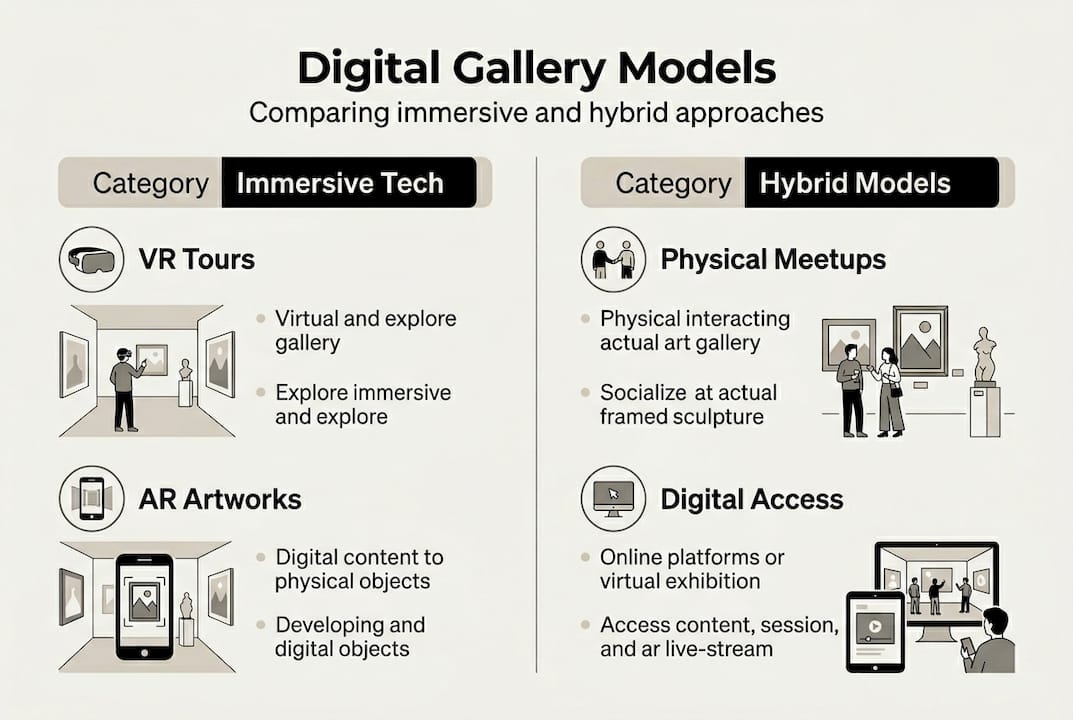
Human-in-the-loop review safeguards against AI hallucinations, where models generate plausible but incorrect descriptions or attributions. Curators validate AI-generated tags, refine thematic clusters, and ensure provenance accuracy before publication. This collaborative model leverages AI's speed and pattern recognition while maintaining ethical standards and scholarly rigour. Research on AI curation highlights the importance of transparency, requiring systems to label AI-generated content and provide audit trails.
Thematic clustering represents a major benefit. AI analyses visual features, historical context, and metadata to group artworks into coherent narratives that might elude manual curation. Visitors experience richer storytelling as exhibitions unfold around concepts like colour theory, social movements, or artistic techniques. However, pitfalls exist. AI can perpetuate biases present in training data, misattribute works, or overlook cultural nuances. Provenance labelling and continuous human oversight mitigate these risks.
Pro tip: Begin with AI curation workflows for smaller collections or temporary exhibits to build confidence and refine processes before scaling to permanent galleries.
- Ingest high-resolution images and existing metadata into your AI curation platform
- Allow AI to generate tags based on visual analysis, then review and correct errors
- Use AI clustering to propose thematic groupings, but validate against curatorial vision
- Generate draft narratives with AI, then rewrite for tone, accuracy, and audience engagement
- Publish pilot exhibitions and gather visitor analytics to refine future curation
- Iterate by feeding performance data back into the AI model for continuous improvement
| Approach | Manual curation | AI-enhanced curation |
|---|---|---|
| Time to curate 500 artworks | 40-60 hours | 8-12 hours (with human review) |
| Thematic consistency | High, but subjective | High, with data-driven patterns |
| Scalability | Limited by curator availability | Scales with collection size |
| Risk of bias | Curator's personal lens | Training data bias, requires oversight |
| Provenance accuracy | Relies on curator expertise | Requires human validation to prevent hallucinations |
Balancing hybrid and pure digital exhibition models
Hybrid exhibitions blend physical and digital elements, creating what industry insiders call "phygital" experiences. These exhibitions might feature physical artworks augmented by AR overlays, QR codes linking to multimedia content, or digital installations alongside traditional pieces. Pure digital exhibitions exist entirely online, offering global accessibility and lower overhead but lacking the tactile and emotional resonance of physical art.
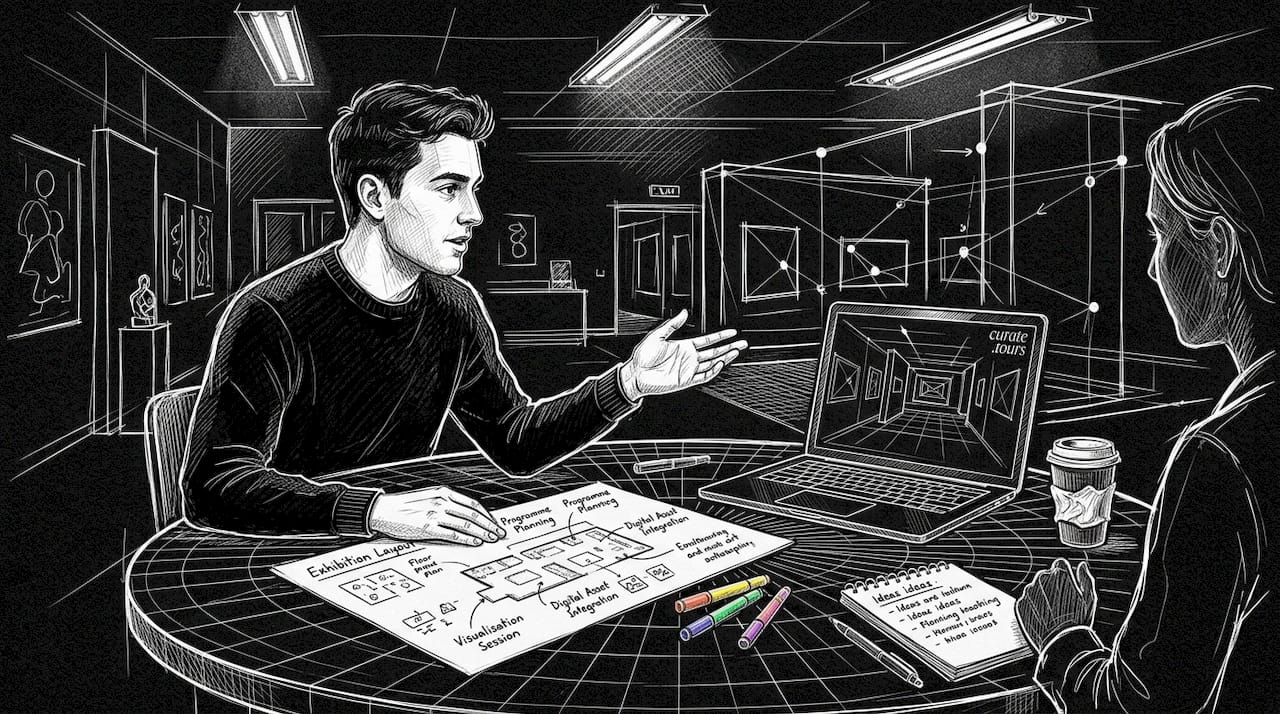
Hybrid exhibition budgets average 55% digital and 45% physical, delivering 20-40% higher ROI due to the texture and emotional impact of physical art. Visitors spend longer in hybrid spaces, engaging with both mediums and returning for repeat visits. The physical component anchors the experience, while digital layers provide depth, interactivity, and accessibility for remote audiences. This model appeals to diverse visitor preferences, accommodating those who crave tangible encounters and those who prefer digital exploration.
Pure digital exhibitions excel in reach and flexibility. They eliminate geographic barriers, reduce costs, and allow rapid iteration based on visitor data. However, they face challenges. Digital fatigue and an analogue rally have emerged as audiences seek respite from screen-based experiences. Curators debate whether digital personalisation enhances or undermines curatorial authority, with some arguing that algorithm-driven tours dilute the intended narrative.
Pro tip: Consider a hybrid exhibition approach that uses digital platforms to extend physical exhibitions, offering virtual tours for global audiences while preserving the physical experience for local visitors.
| Model | Visitor engagement | ROI | Accessibility | Emotional impact |
|---|---|---|---|---|
| Hybrid (phygital) | High, longer visit duration | 20-40% higher | Moderate, requires physical access | High, combines tactile and interactive |
| Pure digital | Moderate, risk of fatigue | Lower, but cost-effective | High, global reach | Moderate, lacks physical texture |
| Traditional physical | High, but limited reach | Moderate | Low, geographic constraints | High, direct art encounter |
- Hybrid models suit institutions with physical spaces seeking to expand reach
- Pure digital models work for emerging artists, decentralised collections, or global audiences
- Monitor visit duration and return rates to assess which model resonates with your audience
- Balance personalisation with curatorial vision by offering guided and exploratory tour options
Practical steps for adopting digital exhibition trends
Adopting AI and immersive tools requires a structured approach that minimises risk while maximising learning. Start by auditing your digital collections. Assess image quality, metadata completeness, and copyright status. High-resolution images and accurate metadata form the foundation for AI curation and immersive displays. Identify gaps and prioritise digitisation efforts to ensure your collection is exhibition-ready.
Select low-code and managed AI tools that integrate with existing systems. Platforms offering APIs, pre-trained models, and user-friendly interfaces reduce technical barriers, allowing curators to focus on content rather than code. Recommended 30-90 day AI pilot projects using low-code tools and managed APIs enable gradual adoption with existing assets. Pilots provide hands-on experience, reveal workflow bottlenecks, and generate data to inform larger rollouts.
Human oversight remains critical. Establish review protocols where curators validate AI-generated tags, descriptions, and thematic clusters before publication. This prevents AI hallucinations, ensures provenance accuracy, and maintains scholarly standards. Document decisions and create feedback loops so the AI model improves over time based on curatorial corrections.
Accessibility and ethical considerations must guide every decision. Ensure virtual exhibitions comply with WCAG standards, offering screen reader support, keyboard navigation, and alternative text for images. Transparently label AI-generated content and provide opt-out options for visitors who prefer traditional curation. Address privacy concerns by anonymising visitor data and clearly communicating how analytics inform future exhibitions.
Pro tip: Launch pilot AI virtual exhibitions with a small, well-documented collection to test workflows, gather visitor feedback, and build internal confidence before scaling.
- Audit your collection for digital readiness, focusing on image quality and metadata accuracy
- Choose platforms with low-code interfaces and managed AI services to reduce technical overhead
- Ingest a pilot collection, allow AI to tag and cluster, then conduct thorough human review
- Generate a draft virtual exhibition, test with a small audience, and iterate based on feedback
- Document lessons learned, refine workflows, and gradually expand to larger collections
- Prioritise accessibility features and ethical transparency from the outset
Discover curate.tours' 3D virtual exhibitions platform
The trends reshaping digital exhibitions demand platforms that combine immersive technology, AI-driven curation, and curatorial control. Curate.tours offers a 3D virtual exhibitions platform designed for artists, curators, and museums seeking to create engaging, accessible digital spaces. The platform supports immersive visitor experiences with interactive features, customisable layouts, and multimedia integrations that bring artworks to life.
Curate.tours enables you to design and publish exhibitions directly in a web browser, eliminating the need for specialised software or technical expertise. Whether you're launching a pilot AI-curated micro-exhibit or building a comprehensive virtual gallery, the platform provides the tools to implement the digital trends discussed in this article. Analytics track audience engagement, informing future curation and helping you refine the visitor experience. By bridging innovation and curatorial authority, curate.tours empowers you to stay ahead in the evolving digital exhibition landscape.
Frequently asked questions on digital exhibition trends
What is the difference between immersive and traditional digital exhibitions?
Traditional digital exhibitions present static images and text, resembling online catalogues. Immersive exhibitions use 3D environments, VR, AR, and AI personalisation to create interactive spaces where visitors navigate, inspect artworks closely, and experience thematic narratives. Immersive formats increase engagement and emotional connection by simulating physical gallery visits.
How does AI improve exhibition curation?
AI automates time-consuming tasks like tagging metadata, clustering artworks by theme, and generating draft narratives. This accelerates curation while preserving human oversight. Curators review AI outputs to ensure accuracy, refine themes, and maintain scholarly standards. AI also personalises visitor experiences by adapting tours based on preferences and engagement patterns.
Why are hybrid exhibitions considered more effective?
Hybrid exhibitions combine physical artworks with digital enhancements, delivering 20-40% higher ROI and longer visit durations. The physical component provides tactile and emotional impact, while digital layers add interactivity and accessibility. This balance appeals to diverse audiences and extends reach to remote visitors through virtual components.
What ethical considerations apply to AI in museums?
AI can perpetuate biases, generate incorrect attributions, or overlook cultural nuances. Museums must implement human-in-the-loop review, transparently label AI-generated content, and maintain provenance accuracy. Privacy concerns require anonymising visitor data and clear communication about analytics use. Ethical AI adoption prioritises transparency, accountability, and continuous oversight.
How can small museums start adopting these digital trends?
Begin with a 30-90 day pilot project using low-code platforms and a small, well-documented collection. Audit digital assets for quality and metadata completeness. Select managed AI tools that integrate easily with existing systems. Test workflows, gather visitor feedback, and iterate before scaling. Prioritise accessibility and ethical transparency from the outset to build trust and ensure inclusive experiences.